
Keep everything a kid already knows
The park, the kids, the controls, the computer levels and the camera came across from Soccer Kids unchanged. Only the rules and the sticks were new.
Case study
A second sport, from first ask to live in one day
Could the Soccer Kids engine carry a different sport? Floor hockey was the test. It went live the day it was asked for, then got faster, calmer and easier to read through a day of play-testing.
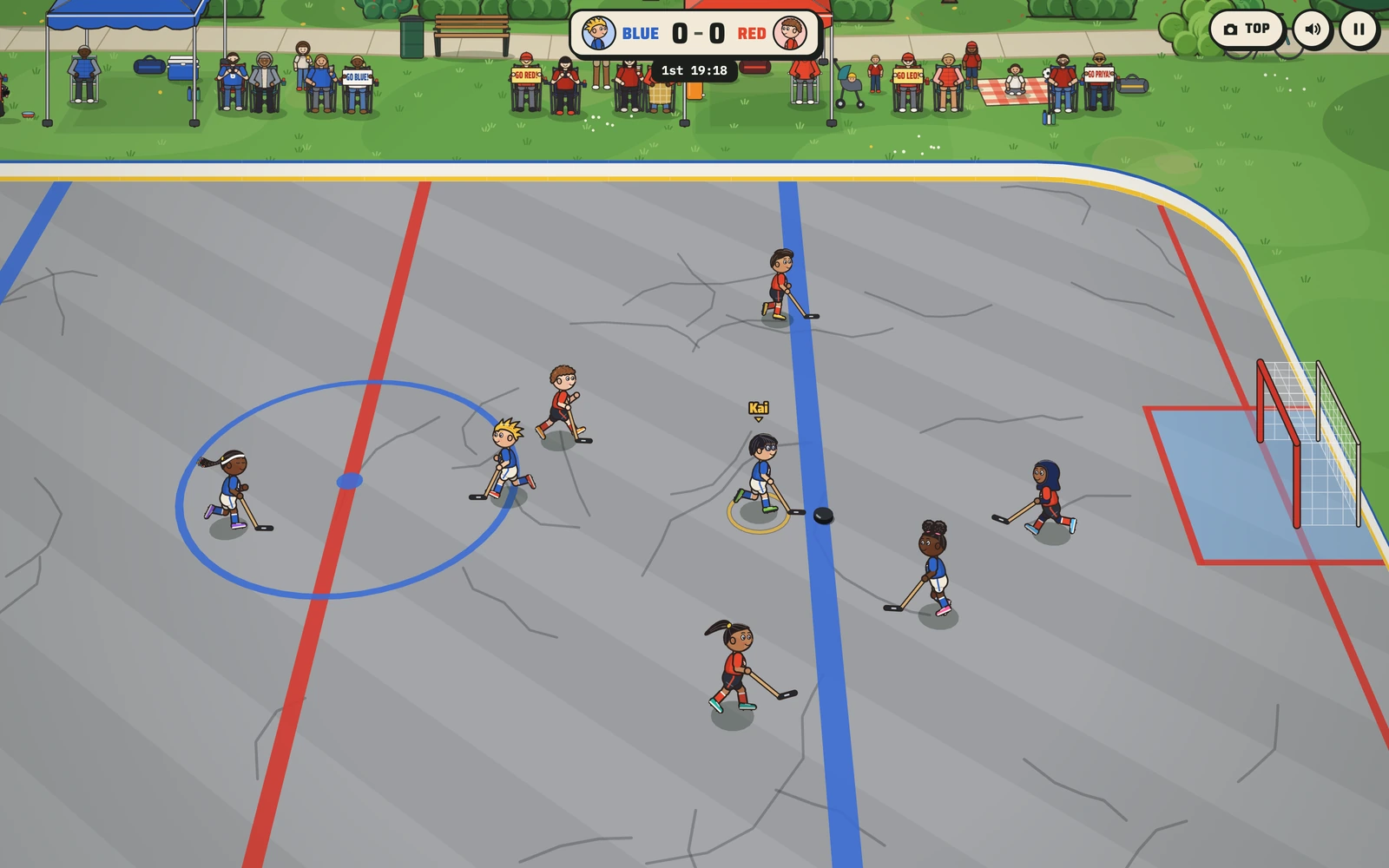
The ask was floor hockey built from the Soccer Kids engine, as a demo on a preview link first: the same park and the same eight kids, with sticks, a puck and boards so the puck never goes out.
It was played that afternoon, reworked several times, and put on ziggy.games the same day. The name changed from Floor Hockey to Hockey Kids later in October; the old web address stayed so links and saved settings keep working.
The park, the kids, the controls, the computer levels and the camera came across from Soccer Kids unchanged. Only the rules and the sticks were new.
A rounded rink means the puck never goes out, so there are no throw-ins, corners or goal kicks to learn. Play stops for goals and restarts with a faceoff at center.
Kids can skate into the crease in front of each goal, but nobody can play the puck in there. A puck carried in slows to 15% speed so it can't be skated into the net, and a slow puck slides back out.
Each kid's arms are solved onto the stick, so both hands stay on the shaft through a swing. The charge draws the stick back and the release swings it.
Each round started with somebody playing the latest build and saying what was wrong. Here is what they said, and what changed.
Feedback
The black puck is hard to see on the dark blacktop.
What changed
The blacktop went light gray. The grass dust from Soccer Kids looked like a second puck, so it became a faint scuff.
Feedback
The kids move less freely than in Soccer Kids.
What changed
Measurements showed the movement was identical, so the fix was visual: away from the puck a kid carries the stick in one hand and pumps the other arm, the blacktop got slanted stripes and cracks, and the camera angle changed for a wide rink.
Feedback
Make it faster and super smooth.
What changed
Kids got quicker, passes crisper and shots harder, the game draws between its 120-per-second simulation steps, and hard shots leave a smear behind the puck.
Feedback
It's hard to get a shot off quickly.
What changed
A tap now shoots from up to about 40 feet out when you're facing the goal, and winding up as you reach the crease fires the shot.
Feedback
Switch faster to the kid near the puck.
What changed
Control now predicts where the puck is going a tenth of a second ahead. The time spent on the wrong kid fell from 20.3% to 7.2%.
Feedback
The defender gets stuck when the other team comes down, and it's a little chaotic.
What changed
Control no longer jumps to a kid chasing the play from behind, the pace came down, and the computer winds up its shots a little slower than you do.
Play-testers said the kids moved less freely than in Soccer Kids. The physics, screen speed and switching all measured identical. The feeling came from how a kid holding a stick looked while running, so the fix was in the drawing, not the physics.
Auto-switch was slow to hand control to the kid nearest the puck. Predicting the puck a fraction of a second ahead cut the longest wrong-kid stretch from 1.62 to 0.91 seconds. After that it sometimes jumped to a forward chasing from behind, so a kid more than about 10 feet past the puck no longer gets control.
A kid pinned against the end boards could shove the puck through them. The boards are now applied again after every bump between a kid and the puck.
Hockey Kids is a copy of the Soccer Kids folder with the rules swapped underneath. The rink is a rounded rectangle of boards with corners rounded off about 10 feet in, the goals sit against the end boards so nothing gets stuck behind them, and each crease is about 5 by 12 feet.
Small probe scripts measured what play-testers felt: movement across the rink, how often control sat on the wrong kid, and what a shot does by distance and angle. The same simulation tests and phone touch checks as Soccer Kids run before every update.
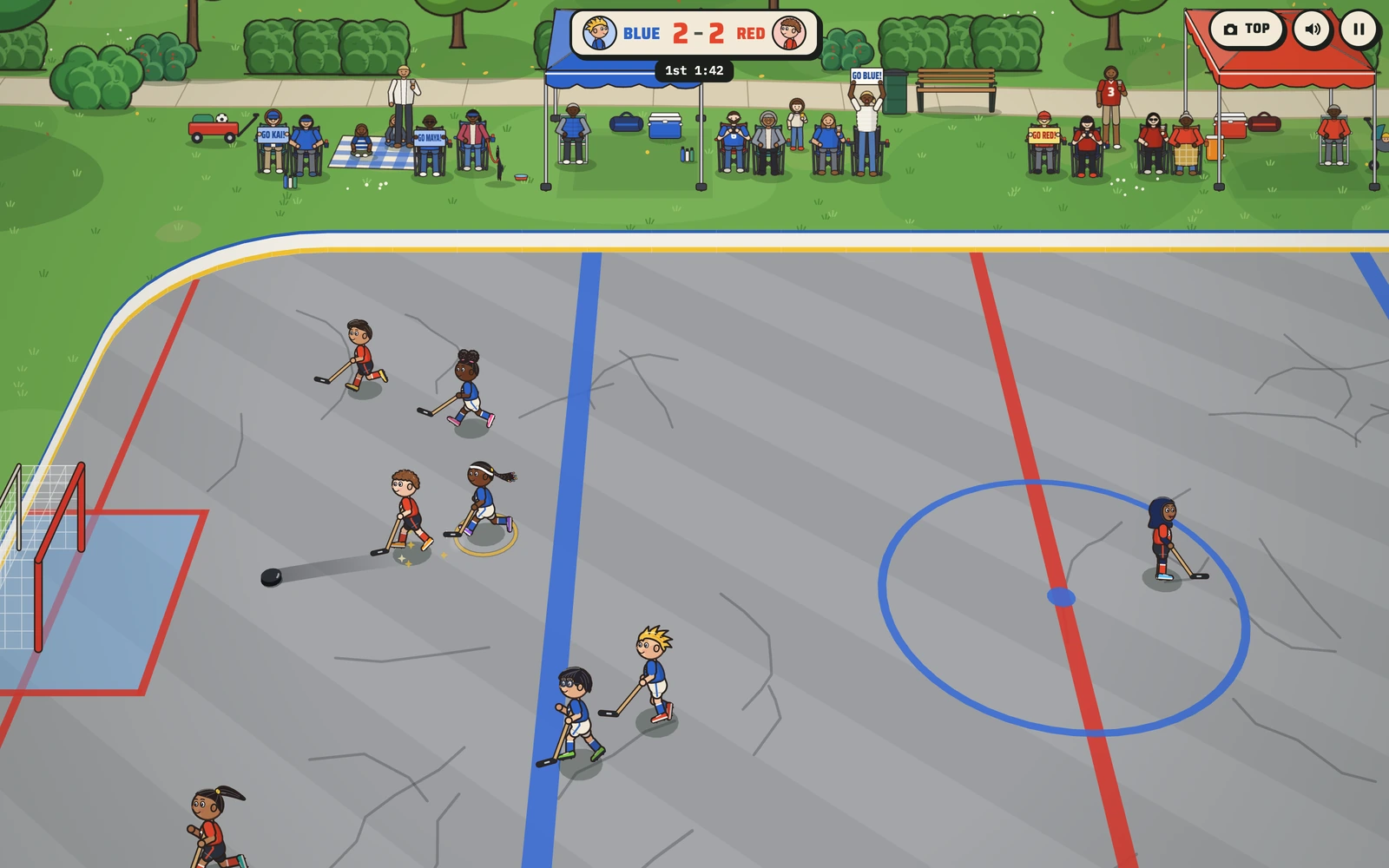
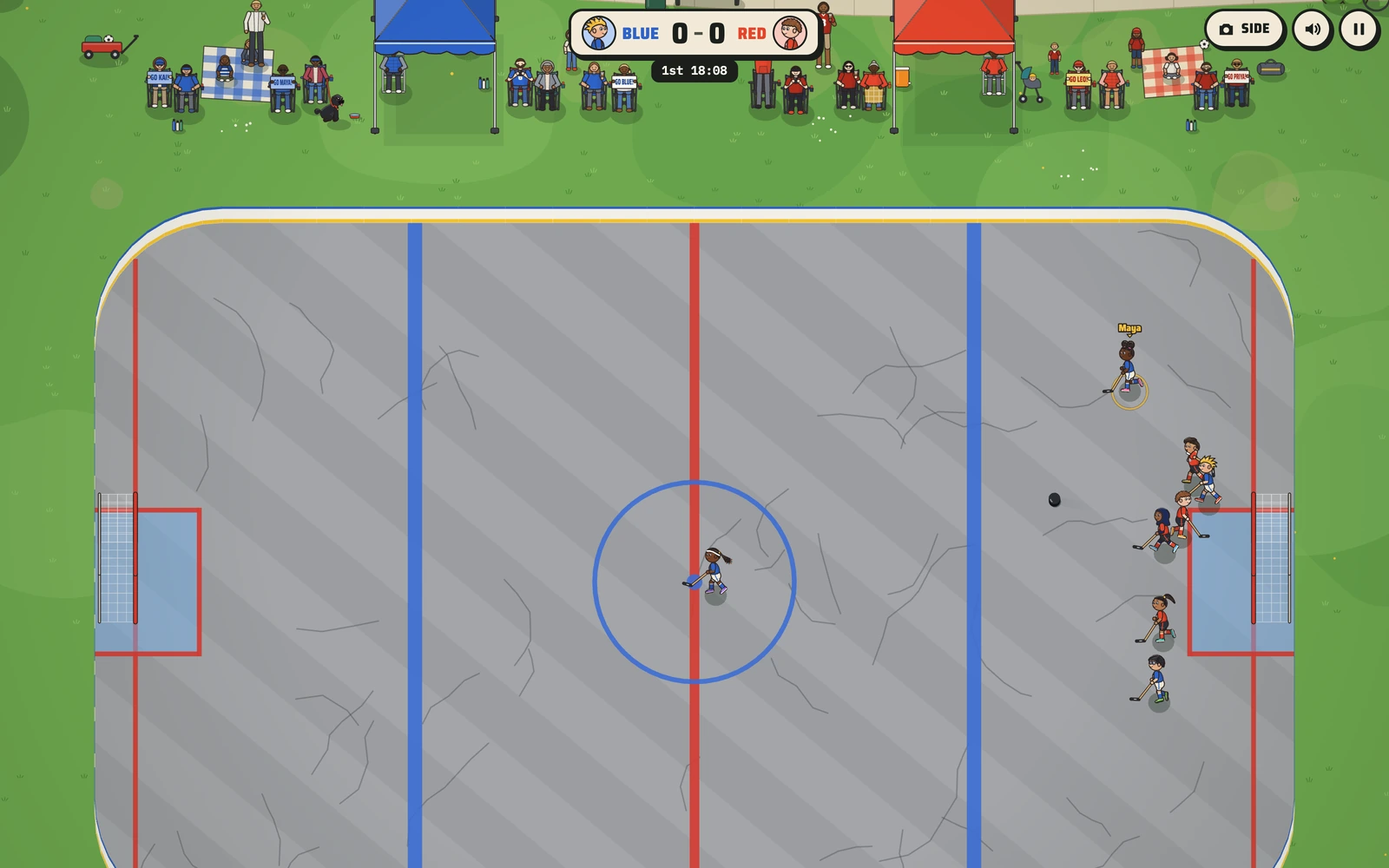
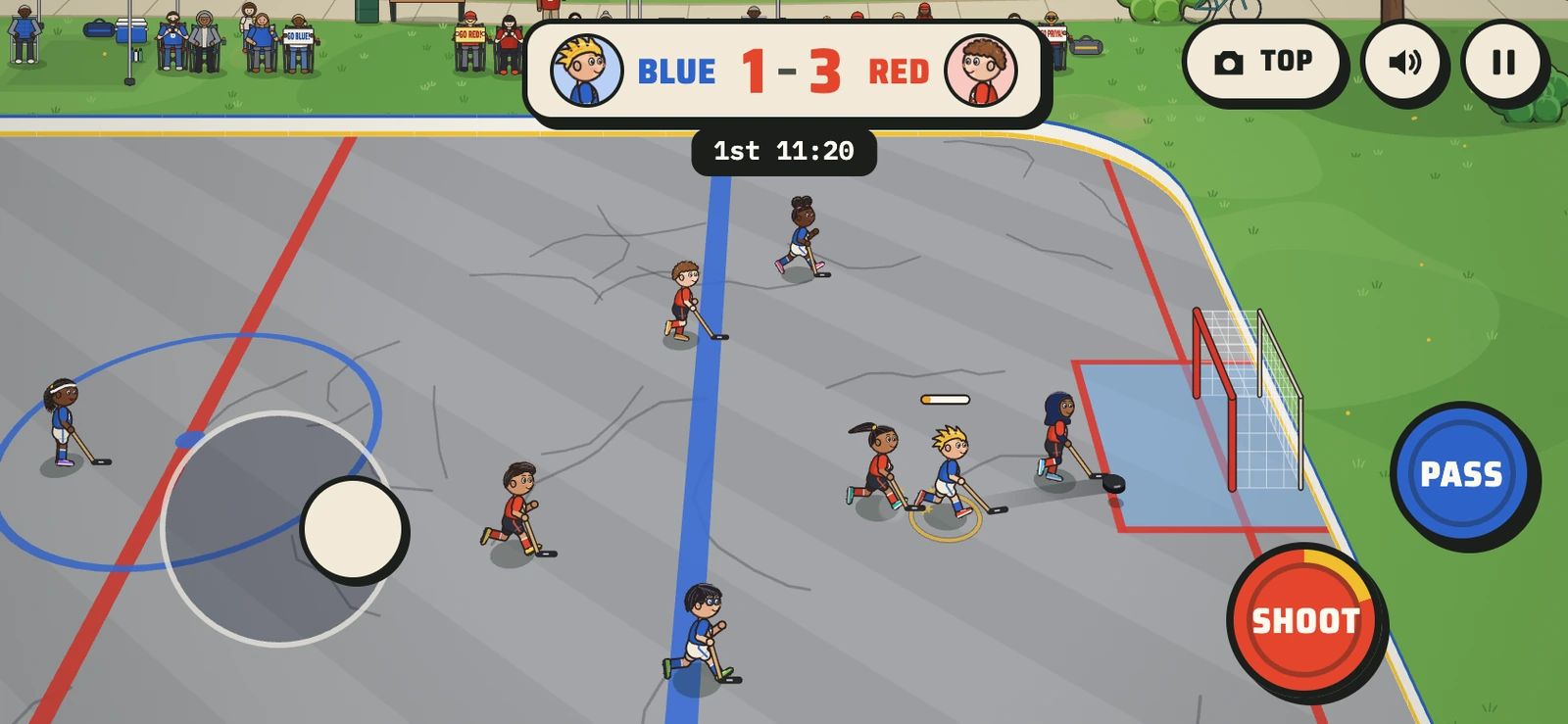
Live on ziggy.games since October 6, 2026, free to play. Over the next day the pace calmed down and Pass plus Shoot became the default controls.
What this means for your game
A new sport costs less than you would think. The park, the kids, the controls and the computer opponents already exist, so your budget goes into the sport itself and the details that make it yours.
We build games around one kid, one team or one school, the same way we built this one: with the people who will play it in the loop. Start with your player.